
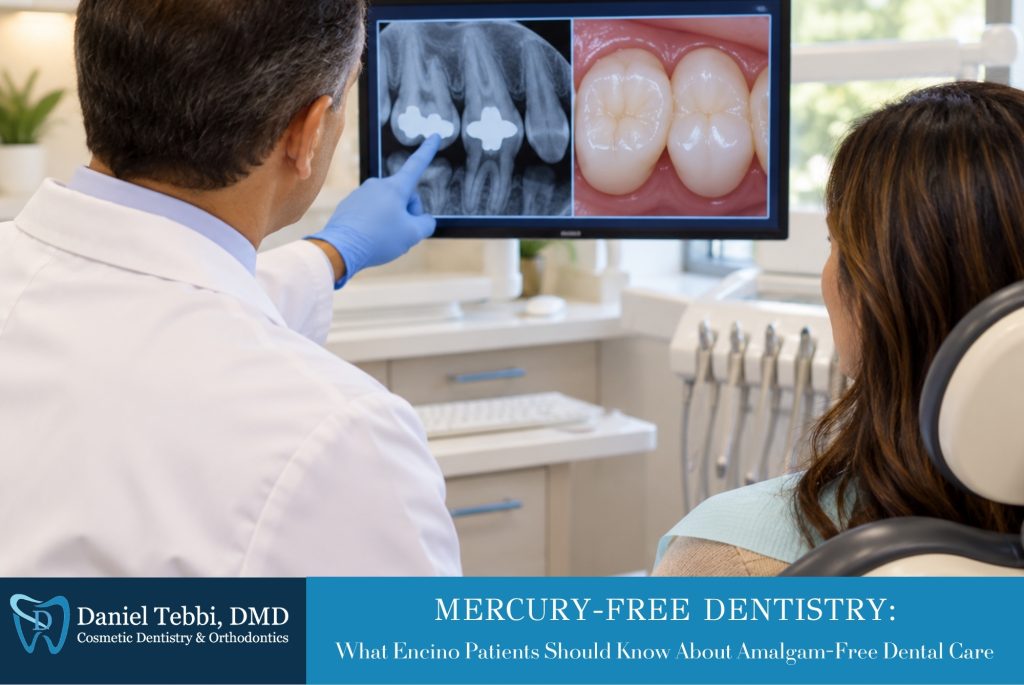
Patients today have more choices than ever when it comes to dental materials. One option that receives considerable attention is mercury-free dentistry, an approach that avoids placing new dental amalgam restorations and instead uses appropriate alternative materials.
Daniel Tebbi, D.M.D. provides mercury-free and biocompatible dentistry in Encino, California. Understanding what dental amalgam contains—and what current scientific guidance actually says about it—can help patients make informed decisions about their dental care.
What Is Dental Amalgam?
Dental amalgam has been used to restore cavities for generations. It contains a mixture of metals, including silver, copper, tin, and elemental mercury. The FDA states that approximately 50% of dental amalgam by weight is elemental mercury.
Because amalgam has a silver-colored appearance, it is sometimes called a “silver filling,” although that term does not fully describe its composition.
What Does Mercury-Free Dentistry Mean?
A mercury-free dentist does not place new mercury-containing amalgam fillings. Depending on the clinical situation, alternative restorative materials may include tooth-colored composite resin or other appropriate materials.
Daniel Tebbi, D.M.D. describes the Encino practice as mercury-free and amalgam-free, with an emphasis on biocompatible dental treatment.
Are Amalgam Fillings Dangerous?
This question requires a balanced answer.
The FDA states that amalgam fillings can release small amounts of mercury vapor. It recommends that certain higher-risk groups avoid new amalgam fillings when possible and appropriate, including pregnant women and women planning pregnancy, nursing mothers, young children, people with certain neurological or kidney conditions, and people with known sensitivity to mercury or other amalgam components.
However, the FDA does not recommend removing intact amalgam fillings that are in good condition simply to prevent disease. Removing an intact restoration can remove healthy tooth structure and temporarily increase mercury-vapor exposure during the removal procedure.
When Might an Existing Amalgam Filling Need Replacement?
Like any restoration, an amalgam filling may eventually crack, wear, loosen, develop recurrent decay around its margins, or otherwise require replacement.
If an existing filling needs treatment for dental reasons, patients can discuss non-amalgam replacement options with their dentist.
Patients specifically concerned about existing amalgam should receive an individualized examination rather than assuming every old filling needs to be removed.
What Are the Benefits of Tooth-Colored Fillings?
Composite restorations can closely match natural tooth color and chemically bond to tooth structure. They are commonly used for many cavities and other restorative needs.
However, the ideal material depends on the tooth, size and location of the restoration, moisture control, bite forces, and individual clinical circumstances.
What Is Biocompatible Dentistry?
Biocompatible dentistry considers the materials used in treatment as part of the overall treatment-planning process.
Dr. Tebbi’s practice emphasizes biocompatible, mercury-free dentistry while also providing comprehensive preventive and restorative dental care.
Frequently Asked Questions About Mercury-Free Dentistry
Does mercury-free mean the office never uses amalgam?
Mercury-free generally means new amalgam fillings are not placed. Ask the dental practice about its specific materials and protocols.
Should I automatically replace all my silver fillings?
No. Current FDA guidance does not recommend removing intact amalgam fillings that are in good condition solely to prevent disease unless removal is considered medically necessary by a healthcare professional.
What can replace an amalgam filling?
Depending on the tooth, alternatives can include composite resin and other restorative materials. Your dentist can recommend an appropriate option after evaluating the tooth.
Are white fillings strong?
Modern composite materials can provide effective restorations for many teeth. Longevity depends on factors such as restoration size, location, oral hygiene, bite forces, diet, and grinding or clenching.
Can I request mercury-free dental care?
Yes. Patients can discuss their preferences with their dentist and ask about available restorative materials before treatment begins.
Contact Information
Daniel Tebbi, D.M.D.
16661 Ventura Blvd Ste 620
Encino, CA 91436
Phone: (818) 789-2034
Website: bestencinodentist.com
Request an Appointment